
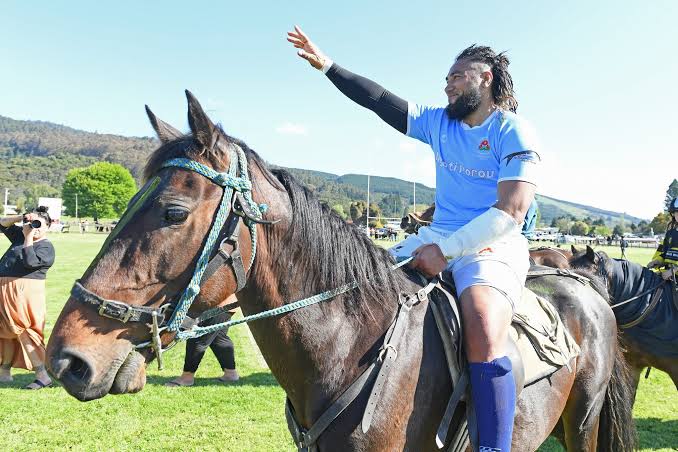
Few rugby players can reach the age of 40 with two World Cups and more than 100 international appearances under their belt. Ma’a Nonu is one of these individuals, his career being packed with plenty of memorable moments. A world-class player with seniority, Nonu earned his place within the big rugby union centres in New Zealand. His achievements and distinctive playing style have made him a standout figure in the sport. For fans following his team and New Zealand’s national side, GGBEToffers a way to keep up with upcoming matches and check the latest odds.
Below are 10 things you should know if you’re following his career.
1. He Grew Up in a Competitive Wellington Environment
Ma’a Allan Nonu was born in 1982 in Wellington, the capital city of New Zealand. Being at the heart of everything allowed him to hone his rugby skills, going through local schools and club systems before making his way into provincial and international competitions.
The player attended the Strathmore Park Primary School and the Rongotai College, where he took part in various sports events. This allowed him to work on his physical and technical skills, so he could become one of the leading players in the world.
2. He Earned More Than 100 Test Caps
Between 2003 and 2015, Nonu earned a total of 103 Test caps in the All Blacks. This was something big in rugby, because 100 appearances required a player to keep their standards high across multiple seasons. Nonu also had to do that while playing against some of the strongest national teams.
In October 2015, he became the 6th All Black to get to the 100-Test milestone. This was a short time after New Zealand won the Rugby World Cup in England, bringing the spotlight on him for a long time after.
3. He Played Centre Throughout Most of His Career
Nonu wore multiple jersey numbers, including 13, 21, 22, and 23. That said, the primary number he wore was 12, marking him as an inside centre. This position required him to carry the ball into defensive gaps, organize midfield defences, and distribute passes.
His early career included a bit of outside centre and wing, but his position in the center became defining for him. It demanded a mix of physical strength, technical ability, and decision-making, using his skills to create passing opportunities. His goals weren’t just to help himself, but his teammates too.
4. His All Blacks Debut Happened in 2003
Nonu’s debut in the All Blacks Test occurred on the 14th of June, 2003, when he was barely 21 years old. New Zealand may have lost the match by 15-13, but it allowed the player to showcase his talent and kick-start his international career.
His first years with the team were not smooth, as Nonu had to prove his worth within a highly competitive environment. To stand out, he honed his decision-making skills and broadened his attack, going past mere international strength.
5. He Won Two Rugby World Cups
Winning just one World Cup is an achievement that can define a player’s career, and Nonu has two of those. The player helped New Zealand win the Webb Ellis Cup in 2011 and 2015, with the former taking place in his home country. This placed significant expectations on them as hosts.
The second victory was historic for New Zealand, because it marked them as the first men’s team to win World Cup trophies back-to-back. The second World Cup also marked the end of his Test career.
6. His Distinctive Playing Style Made Him Famous
Many fans recognized Nonu because of his appearance, as his dreadlocks and his occasional use of eyeliner made him stand out. However, what truly made him recognizable was his playing style, which helped his team advance during tournaments.
The player is known for his fast running, along with his ability to break tackles, proving effective on the rugby field. He combines speed, strength, and vision, which made fans love him and opponents fear him.
7. He Had a Stint with the Sharks at Age 44
In 2026, at the age of 44, Nonu sealed a deal with the Sharks in Durban, South Africa, to become a mentor. The player is still active in the professional rugby league, but this position allowed him to share his knowledge with the younger generations.
During this time, Nonu remained available for selection. He was named bench player for Shark matches in 2026, when the team was playing against the All Blacks. This position meant that he could face the team he represented more than a hundred times.
8. Most of His Success Happened with The Hurricanes
Nonu was part of several teams throughout his career, but his most notable successes came while he was part of the Super Rugby team, the Hurricanes. He represented the team throughout multiple seasons between 2003 and 2011, earning him international recognition.
The player moved to the Blues and the Highlanders between the 2012 and 2015 seasons, but he came back to the Hurricanes in 2015. Nonu would continue playing in and out of the team, but the Hurricanes remained a team he would frequently return to.
9. He Almost Switched to Rugby League in 2007
A surprising moment of his career was in 2007, when he almost joined rugby league. Both rugby codes have similar historical roots, but the tactical structure, rules, and possession approach were different.
Nonu decided against the move in the end, because it meant he’d have to completely adjust his game. He initially signed a contract with the West Tigers, but did not return it to complete the move.
10. He Was the Oldest Player in France’s Top 14
The average rugby player retires between 32 and 35 years old, as the cumulative physical wear and tear makes it difficult to perform. Nonu kept himself in shape and was the oldest player to be part of the Top 14 in France, while playing for RC Toulon.
This record-breaking appearance happened in 2025, when Nonu was two months short of age 43. He broke Karena Wihongi’s previous record, who was aged 40 at that time.
Ma’a Nonu enjoys a long-standing career in the world of rugby, reaching a level of international success that very few have managed. While he’s no longer as active in the bigger tournaments, he continues playing domestically and guiding the younger generations.

